

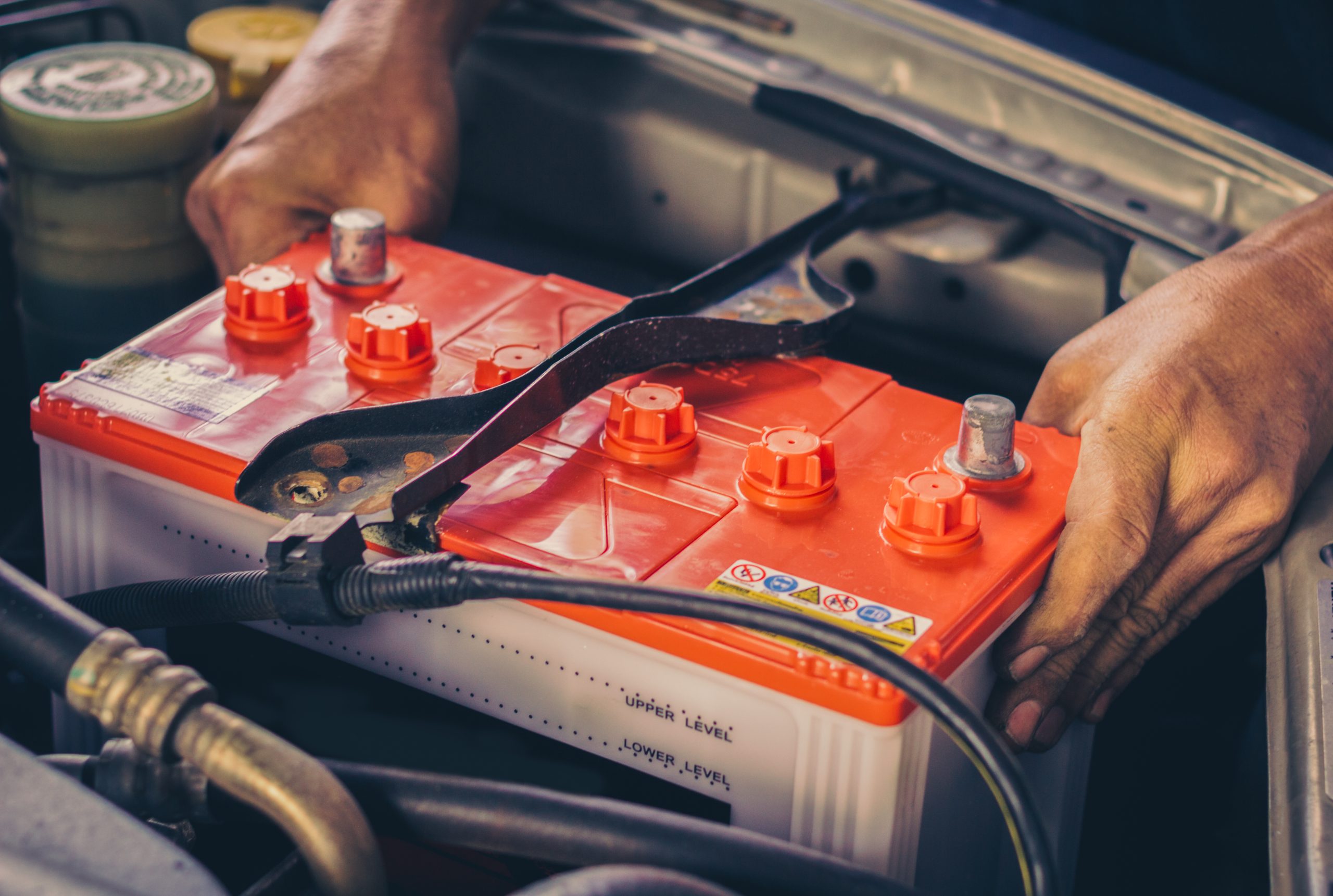
The battery is one of your Nissan’s most important components, providing the initial electrical charge that causes the engine to crank and begin combustion. The battery will wear out in time and can also be damaged by other issues in your engine. As your Nissan dealer, we want to tell you a few signs you need to visit us for a new car battery.
Signs You Need a New Car Battery From Your Nissan Dealer
Old Battery
The average useful life of a battery is three to five years, then it needs replacement. This relatively short life is due to the breakdown of the essential chemicals inside the battery that enable it to store and supply electricity.
A weakening battery always shows signs it’s failing, giving you time to replace it. These signs include slower starting, dim interior lights, and slow accessories when operating under battery power. We recommend a battery test when your battery is three years old, as this will reveal its remaining strength and capabilities. If the test shows your battery is failing, we can install a replacement in minutes.
Corrosion
Sulfuric acid is the main chemical in the battery, and as it breaks down, it releases hydrogen gas. The minute hydrogen particles can escape the battery’s protective casing and enter the engine compartment. Sulfur molecules are always present in the engine as they’re released from fuel. Hydrogen and sulfur will join to form hydrogen sulfide, a poisonous and corrosive gas.
Hydrogen sulfide is drawn toward the battery terminals, forming a white, gray, or green acidic salt around them. This acidic salt gradually dissolves the terminals and any other metal it comes into contact with. As the terminals are damaged, your battery will weaken further. We can temporarily remove corrosion, but it will return as long as the damaged battery remains. We’ll install a new battery and clean the corrosion to fix this issue.
Overcharging
The alternator is a mini generator, and one of its functions is to recharge the battery. Recharging begins as soon as your engine starts and continues until the battery is fully charged. The alternator recharges the battery at full power for ten minutes, then switches to recharging at 10% until battery capacity is reached.
The voltage regulator is part of the alternator and controls the flow of electricity to the battery and other systems. If the regulator is damaged, the alternator may continue to charge the battery at full power. This heats the battery, and the electrolyte inside can boil. If this happens, your battery light will illuminate, and you’ll smell acidic fumes from the engine. We’ll repair or replace the alternator and test your battery to determine if it needs replacement.
Don’t risk a dead battery. Contact our service department today at Nissan of Bowie in Bowie, MD.
Connect with us

